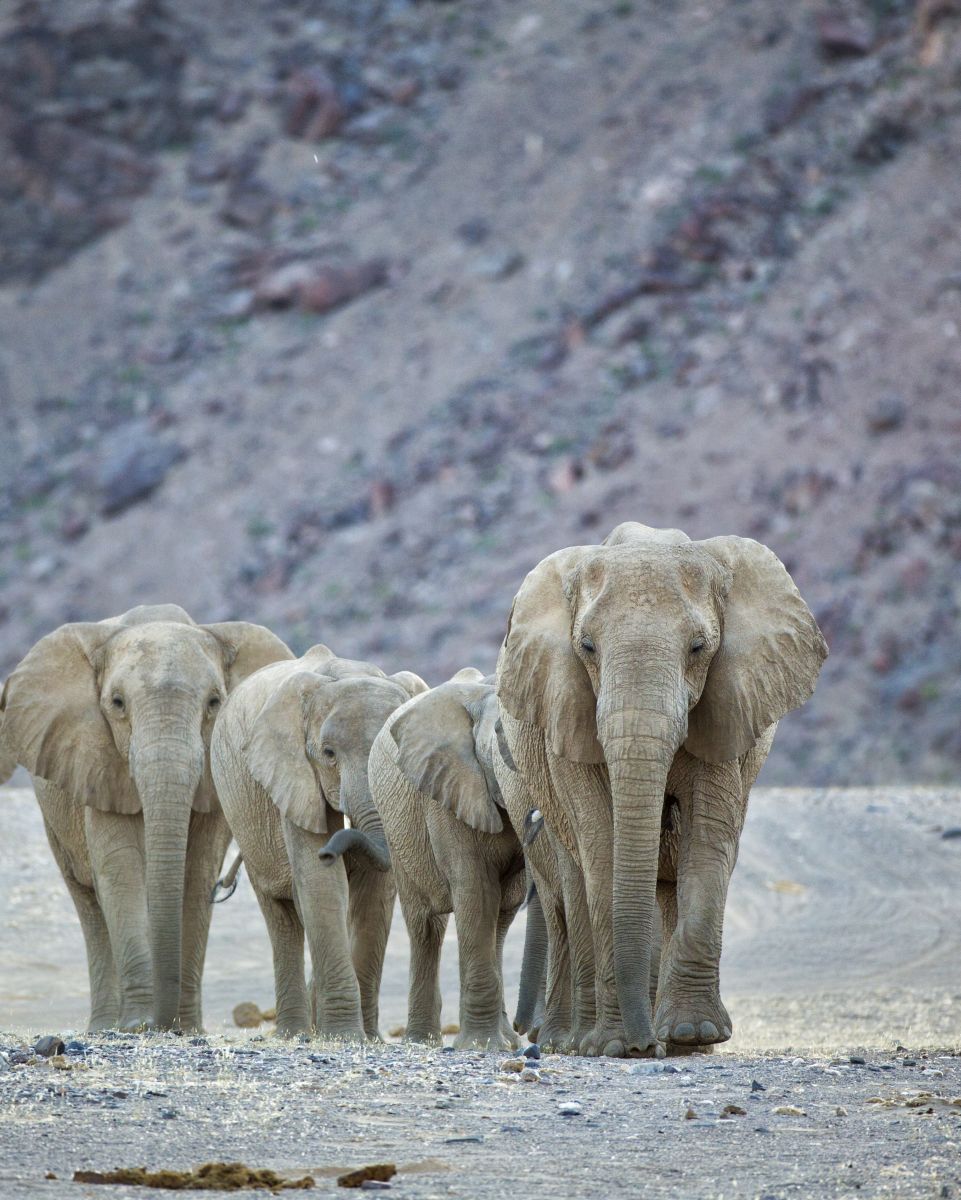
The matriarch moves first. She leads her herd down the parched riverbed — unhurried, deliberate — and watching her, something shifts. There is nothing green in sight. No water. The mountains tower over them, indifferent. And yet here they are, a dozen elephants including tiny calves, navigating a landscape that seems designed to refuse life.
The questions come fast, and they’re not gentle ones. What will they eat? What about the babies? Will all of them make it?
These are not the comfortable questions of a safari. The desert-adapted elephants of the Hoanib have been here long enough that their feet have reshaped to the terrain, their bodies recalibrated to scarcity. They know where to dig along the dry riverbed to find water buried beneath the sand. They know which trees they can take from without tipping the balance.
The vision of that singular herd, mountains at their back, not another living thing in sight — the wonder, the intrigue, the fear, inextricably etched together in memory.